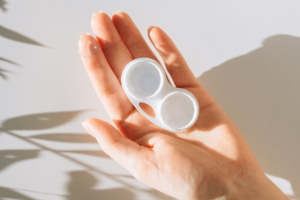

For decades, contact lenses have done one primary job: correcting vision.
But researchers and technology companies are working on contact lenses that could someday do much more.
Imagine contact lenses with sensors that monitor eye pressure for glaucoma, help track blood sugar levels, deliver medication directly to the eye, or even display digital information using augmented reality technology. While some of these ideas still sound futuristic, many are already being actively researched and developed.
The future of contact lenses may look very different from the lenses people wear today.
Let’s explore some of the most exciting developments in smart contact lens technology and what they could mean for the future of eye care.
What Are Smart Contact Lenses?
Smart contact lenses are wearable eye technology that combines vision correction with advanced technology. Depending on the design, these lenses may include tiny sensors, electronic components, microchips, or specialized materials that allow them to collect information or perform additional functions beyond simply improving eyesight.
Some smart lenses are designed for medical purposes, while others focus on augmented reality or digital display technology. Although many smart contact lenses are still experimental, research in this field has grown rapidly over the past several years.
RELATED CONTENT: How AI Is Changing Eye Disease Detection
Contact Lenses That Monitor Eye Health
One of the most promising uses for smart contact lenses involves health monitoring.
Because contact lenses sit directly on the eye, they can potentially gather information from tears and eye pressure in ways that other wearable devices cannot.
And here’s what the future of eye care technology could do.
Glaucoma Monitoring Contact Lenses
Researchers have developed experimental contact lenses capable of monitoring intraocular pressure throughout the day.
This is especially important for glaucoma patients because eye pressure naturally fluctuates. A pressure reading taken during a routine appointment only captures a single moment in time.
Smart contact lenses with embedded sensors may someday allow doctors to track pressure changes continuously, helping improve glaucoma management and early detection.
Glucose Monitoring Through Tears
Another area of research involves contact lenses that monitor glucose levels through tears.
Scientists have explored whether tear fluid could provide information similar to blood glucose testing. The idea is appealing because it could potentially reduce the need for finger-stick blood testing for some patients with diabetes.
However, researchers are still working to determine how accurately tear glucose levels reflect blood glucose levels in real-world use. If they can accurately detect blood sugar, these glucose-monitoring contact lenses could be a game-changer for people with diabetes.
Drug-Delivering Contact Lenses
One of the biggest challenges with eye drops is consistency. Many patients struggle to use drops correctly or forget doses altogether.
That’s where drug-delivering contact lenses could become extremely useful.
Researchers are developing contact lenses designed to slowly release medication over time while the lens is worn. These lenses may eventually help treat conditions such as:
- Glaucoma
- Dry eye disease
- Eye allergies
- Infections
- Inflammation
Because the medication is delivered directly to the eye over an extended period, these lenses could potentially improve treatment effectiveness while reducing the need for frequent eye drops.
Some early versions of medication-releasing lenses are already being studied in clinical settings.
Augmented Reality Contact Lenses
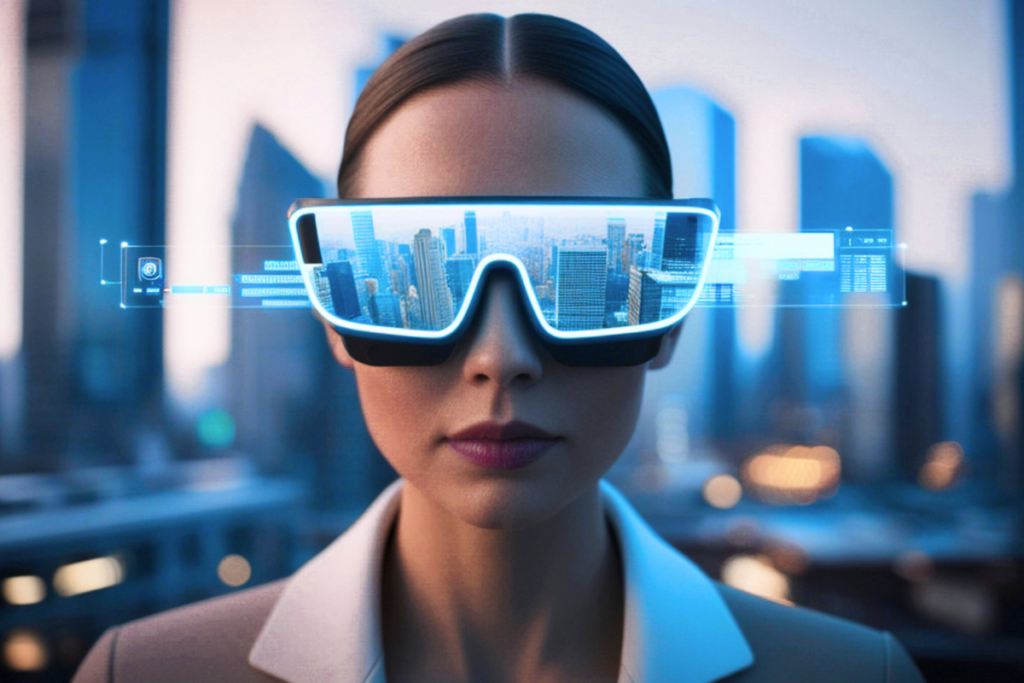
Perhaps the most futuristic concept involves augmented reality lenses. These contact lenses of the future aim to project digital information directly into the wearer’s field of vision using microscopic display systems built into the lens itself.
Potential uses could include:
- Navigation directions
- Real-time translation
- Notifications
- Fitness tracking
- Hands-free information display
Companies and researchers are actively exploring ways to make augmented reality contact lenses possible, although there are still major technical hurdles to overcome.
Unlike smart glasses, contact lenses would place the technology directly on the eye, potentially creating a much more seamless experience.
Autofocusing Contact Lenses
Another exciting possibility is the development of autofocusing contact lenses.
These lenses automatically adjust focus depending on where the wearer is looking. So, they’re similar to how younger eyes naturally focus before presbyopia develops.
Presbyopia is the age-related loss of near focusing ability that typically begins in the 40s. Many adults eventually need reading glasses, bifocals, or progressive lenses because of this change.
Researchers hope future smart contact lenses may someday help restore some of that dynamic focusing ability electronically or mechanically.
Although the technology is still developing, it could eventually offer another option for managing age-related near vision problems.
RELATED CONTENT: How Digital Progressive Lenses Make Multifocals Feel More Natural
Challenges Facing Smart Contact Lens Technology
Even though the future of smart contact lenses is exciting, several major challenges still exist.
Power and Battery Limitations
One of the biggest obstacles is power. Tiny electronic components require energy, but fitting a safe and reliable power source into a thin contact lens is extremely difficult.
Researchers are exploring miniature batteries, wireless charging systems, and energy-harvesting technologies, but practical solutions are still evolving.
Safety & Comfort
Contact lenses must remain safe, breathable, and comfortable for the eye. Adding sensors and electronics creates additional challenges related to:
- Oxygen flow to the cornea
- Heat generation
- Lens thickness
- Long-term comfort
- Durability
Any future smart lens technology will need to meet strict medical safety standards before becoming widely available.
Cost & Accessibility
Like many new technologies, smart contact lenses will likely be expensive initially.
Advanced manufacturing, medical approvals, and specialized technology could make these lenses costly during early adoption phases.
Over time, costs may decrease as technology improves and becomes more common.
Privacy Concerns
As wearable technology becomes more advanced, privacy concerns may also increase.
Devices capable of gathering health information or displaying digital content could raise questions about data security and how information is stored or shared.
Are Smart Contact Lenses Available Right Now?
Most advanced smart contact lens technologies are still in development or clinical research phases.
While some prototypes and early-stage products exist, fully functional augmented reality contact lenses are not yet part of routine eye care.
However, innovation is happening quickly. Many technologies that once sounded futuristic — including wearable fitness trackers, smart watches, and AI-powered devices — are now part of everyday life. Smart contact lenses may eventually follow a similar path.
For now, traditional contact lenses remain the safest and most practical option for vision correction for most patients.
What This Means for the Future of Eye Care
The future of contact lenses is likely to extend far beyond simple vision correction. As smart eye technology continues evolving, contact lenses may eventually play a role in:
- Disease monitoring
- Medication delivery
- Vision enhancement
- Real-time health tracking
- Augmented reality experiences
While many of these developments are still years away from widespread use, they highlight how rapidly eye care technology is advancing.
For patients, this could someday mean more personalized, convenient, and connected vision care solutions than ever before.
The Bottom Line
Smart contact lenses represent one of the most fascinating areas of emerging eye care technology. Researchers are exploring lenses capable of monitoring eye health, delivering medication, adjusting focus, and even displaying digital information directly in front of the eye.
Although many of these technologies are still experimental, the future of contact lenses is moving far beyond traditional vision correction.
As research continues, smart lenses may eventually change the way we think about eye care, wearable technology, and even daily life itself.