

Technology in healthcare is evolving quickly. In eye care, we’ve seen incredible advances in lens materials, retinal imaging, and even smart glasses. But there’s another innovation getting attention lately: hearing aid glasses.
If you’ve heard about glasses that also function as hearing aids, you might be wondering:
- Are they real?
- How do they work?
- Are they better than traditional hearing aids?
- And should I be recommending them to patients who wear glasses?
Let’s take a closer look at how glasses with hearing aids function and who might benefit from this emerging technology.
What Are Hearing Aid Glasses?
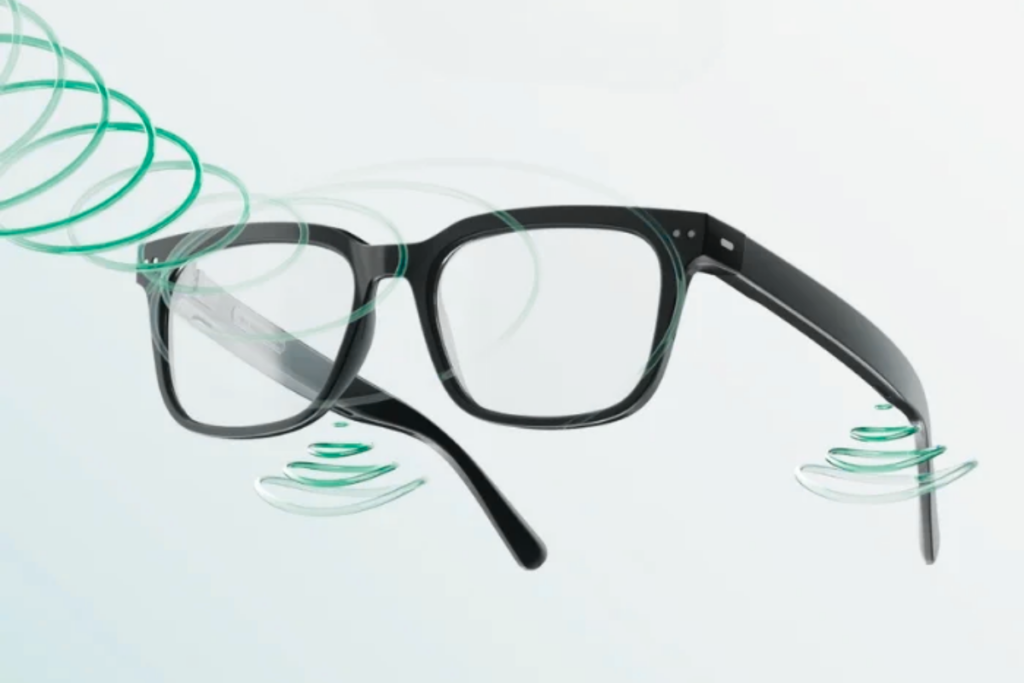
Hearing aid glasses are exactly what they sound like: eyewear that incorporates built-in hearing assistance technology directly into the frame.
Instead of wearing glasses and separate behind-the-ear hearing aids, the hearing components are discreetly housed in the temples (arms) of the glasses.
Some models use:
- Directional microphones
- Bone conduction technology
- Air conduction speakers
- Bluetooth connectivity
The goal is simple: combine two essential medical devices into one streamlined solution.
For patients who already rely on glasses daily, integrating hearing assistance into their eyewear can feel intuitive and less cumbersome.
How Do Hearing Aid Glasses Work?
There are generally two main approaches to this unique hearing loss solution:
1. Air Conduction Systems
These function similarly to traditional hearing aids. Tiny speakers embedded in the arms of the glasses direct amplified sound toward the ear canal. Microphones capture surrounding sounds, and onboard processors enhance speech clarity.
2. Bone Conduction Systems
Bone conduction glasses send sound vibrations through the bones of the skull directly to the inner ear, bypassing the eardrum. This technology is especially helpful for certain types of conductive hearing loss.
In many newer versions, these smart glasses with hearing aids also include:
- Rechargeable batteries
- Smartphone app control
- Bluetooth streaming for calls and music
- Noise reduction and speech enhancement algorithms
In other words, these are not just “glasses with speakers.” They are carefully engineered medical devices designed to assist hearing while maintaining the function and style of eyewear.
RELATED CONTENT: How AI Is Changing Eye Disease Detection
Who Might Benefit from Hearing Aid Glasses?
Not everyone with hearing loss is an ideal candidate. But certain individuals may find this option especially appealing.
- Patients Who Already Wear Glasses Full-Time: If someone relies on prescription glasses all day, combining hearing support into the same frame can reduce the number of devices they manage. There’s no need to coordinate glasses and behind-the-ear hearing aids.
- Mild to Moderate Hearing Loss: Many hearing aid glasses are best suited for people with mild to moderate hearing loss. Severe hearing loss may still require more powerful traditional hearing aids.
- Individuals Who Struggle with Behind-the-Ear Devices: Some patients find traditional hearing aids uncomfortable or difficult to position properly alongside their glasses. The overlap behind the ear can feel crowded. Hearing aid glasses eliminate that stacking issue.
- Tech-Savvy Users: Many of these devices pair with smartphones for adjustments and streaming. Patients who are comfortable using apps may appreciate the flexibility and customization.
Advantages of Hearing Aid Glasses
Let’s break down the main benefits.
- Streamlined Design: One device instead of two. For some patients, this simplifies daily life.
- Cosmetic Appeal: Hearing loss can carry a stigma for some individuals. Integrating hearing devices into glasses can feel more discreet than visible hearing aids.
- Reduced Ear Canal Irritation: Traditional in-ear devices can cause discomfort, moisture buildup, or irritation for some users. Certain hearing aid glasses (especially bone conduction models) avoid the ear canal entirely.
- Multifunctional Technology: Many models allow users to stream music, take phone calls, and adjust settings via app controls.
Potential Limitations to Consider
As exciting as this technology is, it’s important to understand its limitations.
- Frame Dependence: If your prescription changes, you may need to update the lenses. Not all hearing aid glasses allow easy lens swapping.
- Fit & Comfort: Glasses must fit correctly to function properly. Improper adjustment can affect both vision and hearing performance.
- Battery Life: Because these devices power both audio components and connectivity features, battery management becomes important.
- Cost: These are typically premium devices. Insurance coverage varies widely, and patients should investigate both vision and hearing benefits before purchasing.
Are Hearing Aid Glasses Right for You?
If you wear glasses and have hearing concerns, the first step isn’t shopping for technology — it’s getting proper evaluations.
From the eye care side, we ensure:
- Your prescription is accurate
- Your frames fit properly
- Your lenses match your visual needs
From the hearing side, a licensed audiologist should determine:
- The type of hearing loss
- The severity level of hearing loss
- The best amplification strategy
Hearing aid glasses are not a replacement for a full diagnostic hearing test. They are a solution for specific candidates.
What This Means for Eye Care
As an optometrist, I find technologies like this fascinating because they reflect a broader trend: healthcare devices are becoming integrated, wearable, and smarter.
We’ve already seen:
- Smart glasses with augmented reality
- Blue light–filtering lenses for digital strain
- Progressive lens designs that adapt seamlessly to lifestyle needs
Hearing aid glasses represent another step toward merging vision and hearing solutions into unified wearable technology.
For patients who value simplicity and cutting-edge options, these devices may be worth discussing — especially if hearing and vision changes are happening at the same time.
The Bigger Picture: Vision & Hearing Together
Vision and hearing often change gradually with age. Many patients notice:
- More difficulty hearing in restaurants
- Needing subtitles on television
- Increased reliance on reading glasses
- Eye strain and fatigue
These changes don’t happen in isolation. They affect overall quality of life.
Combining devices may not be the right answer for everyone, but thinking about vision and hearing as part of a whole-health conversation absolutely is.
If you’re experiencing changes in either area, it’s worth bringing them up during your next exam. Even if I’m not the one managing the hearing side, I can help coordinate care and ensure your eyewear supports your overall lifestyle.
Final Thoughts
Hearing aid glasses are an exciting development in wearable medical technology. They offer convenience, discretion, and innovation for the right candidate.
But like any medical device, they’re not one-size-fits-all.
If you’re curious about whether this type of smart eyewear could work for you, start with a comprehensive eye exam and a hearing evaluation. From there, you can explore solutions that make sense for your health, comfort, and daily routine.
Technology should make life easier — not more complicated.
And when it comes to both seeing clearly and hearing confidently, thoughtful guidance matters just as much as the device itself.
If you have questions about eyewear options or how new technology might integrate with your prescription, we’re always happy to talk through.