
If you’ve ever tried progressive lenses and thought, “Why does this feel so hard to get used to?” you’re not alone.
Progressive lenses are designed to help you see clearly at multiple distances without the visible line of a bifocal. But for many people, especially first-time wearers, they can feel awkward at first.
That’s where digital progressive lenses come in.
Advancements in lens technology have made modern progressive glasses more comfortable, more precise, and much easier to adapt to. If you’ve struggled with multifocal lenses in the past or are just starting to need them, understanding how these lenses work can make a big difference.
What Are Progressive Lenses?
Let’s start with the basics: progressive lenses vs traditional lenses in your glasses. Progressive lenses are a type of multifocal lens that allow you to see clearly at:
- Distance (driving, watching TV)
- Intermediate (computer use)
- Near (reading, phone use)
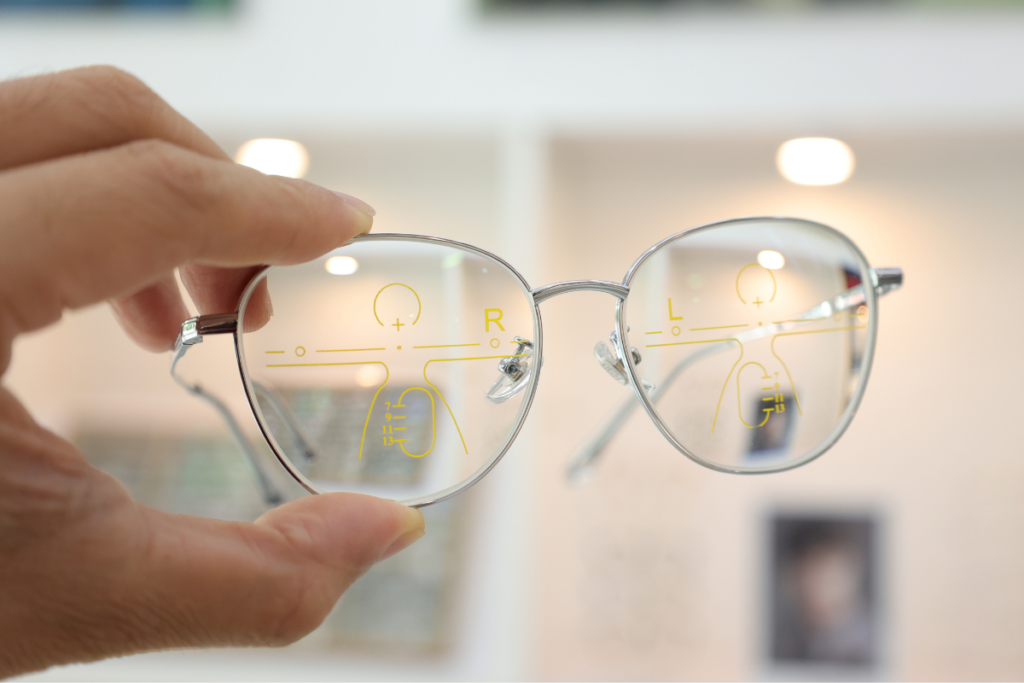
Unlike bifocals, they don’t have a visible line. Instead, the prescription gradually changes from top to bottom.
This is why they’re often called no-line multifocals.
RELATED CONTENT: Choosing the Right Lenses for Your Glasses
Why Traditional Progressive Lenses Can Feel Unnatural
While progressive lenses are incredibly useful, older or traditional designs can come with some challenges:
- Narrow viewing zones
- Blurry areas in your peripheral vision
- A “swim” or distortion effect when moving your head
- Difficulty finding the “sweet spot” for clear vision
These issues are a big reason why some patients feel frustrated when first trying multifocals.
What Are Digital Progressive Lenses?
Digital progressive lenses use advanced computer technology to design lenses with much higher precision than traditional methods.
Instead of using a one-size-fits-all approach, digital lenses are customized based on:
- Your exact prescription
- Frame size and shape
- How the lenses sit on your face
- Your visual habits and lifestyle
This process is often called digitally surfaced lens design or free-form progressive lenses. Ultimately, the goal is to create more comfortable progressive lenses for YOU.
How Digital Progressive Lenses Improve Comfort
1. Wider, More Usable Vision Zones
One of the biggest improvements with digital progressive lenses is the expansion of clear vision areas.
You get:
- A wider distance zone
- A more comfortable intermediate zone for screens
- Easier access to near vision
This makes everyday tasks feel more natural and less restrictive.
2. Reduced Distortion & “Swim” Effect
Traditional lenses often have more peripheral distortion, which can make movement feel disorienting. And adapting to progressive lenses with these side effects can cause headaches.
Digital progressive lenses significantly reduce this effect by:
- Smoothing transitions between prescriptions
- Minimizing unwanted blur on the edges
The result is a more stable and natural visual experience.
3. Faster Adaptation
One of the biggest concerns patients have is, “How long will it take to get used to these?” Progressive lens adaptation with digital progressives is typically much easier because:
- The optics are more precise
- The transitions are more gradual
- The viewing zones are easier to find
Many patients adjust in days instead of weeks.
4. Personalized to Your Lifestyle
Not all eyes or daily routines are the same. Digital progressive lenses can be tailored to how you actually use your vision:
- Heavy computer users
- Frequent drivers
- Readers or hobbyists
This customization helps the lenses feel more intuitive from the start, giving you the vision correction you need.
RELATED CONTENT: Why You Should Own More Than One Pair of Glasses
Who Should Consider Digital Progressive Lenses?
These lenses are especially helpful if you:
- Are new to progressive lenses
- Had trouble with progressives in the past
- Spend a lot of time on screens
- Want the most natural visual experience possible
They’re also a great option for patients entering presbyopia for the first time, typically in their early to mid-40s.
Are Digital Progressive Lenses Worth It?
Digital lenses are definitely an upgrade. So, the answer depends on your priorities.
If you:
- Value comfort
- Want easier adaptation
- Use your eyes across multiple distances throughout the day
Then digital progressive lenses offer these benefits and are often worth the investment.
They’re designed to reduce frustration and improve day-to-day usability, which is something many patients notice immediately.
What to Expect When You First Wear Them
Even with digital lenses, there is still a short adjustment period. You may notice:
- Slight changes in depth perception
- The need to move your head more than your eyes
- A brief learning curve when switching between distances
These changes are normal and typically resolve quickly.
Final Thoughts
Progressive lenses don’t have to feel frustrating or difficult to adjust to.
With modern advancements like digital progressive lenses, multifocals are more comfortable, more precise, and easier to wear than ever before.
If you’ve struggled with progressives in the past or are just starting to need them, this technology can make a meaningful difference in how your glasses feel day to day. Ask us more about it!