
If you wear contact lenses, you know the feeling. Your lenses start out fine in the morning, but by mid-afternoon something feels… off. Your eyes feel dry, tired, or irritated. Maybe your vision isn’t as crisp. Maybe you just can’t wait to take your contacts out.
Most contact lens discomfort isn’t caused by a serious eye problem. In fact, many of the most effective fixes don’t involve a prescription at all. They involve small, practical changes you can make at home.
Let’s talk about why contact lenses become uncomfortable, how you can get relief, and when it’s time to give your eyes a break.
Why Contact Lenses Become Uncomfortable
Contact lenses sit directly on the tear film, which is the thin layer of moisture that keeps your eyes comfortable and clear. When that tear film becomes unstable, lenses stop feeling good, even if your prescription is correct.
Common triggers include:
- Reduced blinking (especially with screens)
- Dry environments
- Long wearing hours
- Airflow from fans or vents
- Dehydration
- Lens deposits
- Incompatible solutions
When one or more of these factors is present, the tear film breaks up more quickly. That’s what leads to dryness, irritation, fluctuating vision, and that familiar “end-of-day” discomfort many contact lens wearers experience.
Tips to Get Relief
1. TakePlanned “Contact Lens Breaks”
This might sound obvious, but it’s one of the most effective fixes. Taking a break from your contact lenses lets your eyes breathe. Literally.
Wearing glasses instead of contacts:
- Gives your corneas more oxygen
- Allows the tear film to recover
- Reduces inflammation over time
Even one or two contact-free days per week can make a noticeable difference in overall comfort, especially for people who wear their lenses all day, every day.
2. Switch Contact Lens Solutions
Not all contact lens solutions are created equal. Some contain preservatives that can irritate sensitive eyes, particularly with frequent use.
If your lenses feel uncomfortable shortly after inserting them — or worse as the day goes on — your solution may be part of the problem.
DIY tip: If you clean lenses nightly, switching to a preservative-free or hydrogen peroxide–based system (used correctly) can significantly improve comfort.
Never mix solution types without guidance. Always follow the instructions carefully.
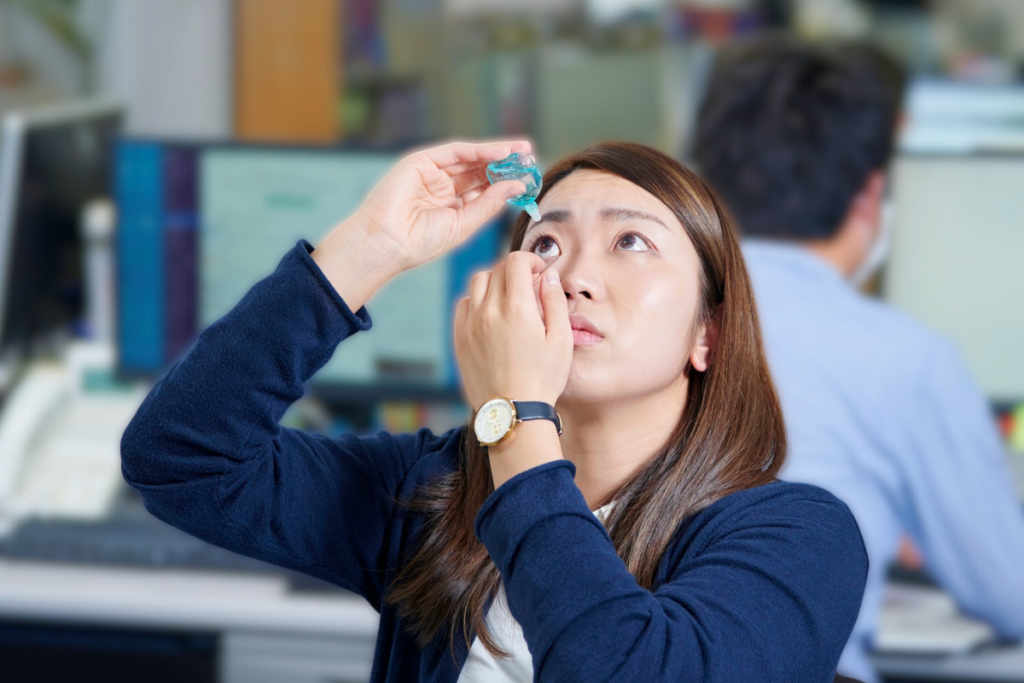
3. Try Rewetting Drops
Try rewetting drops — not saline drops. This is a common misunderstanding. And there is a difference.
- Rewetting drops are designed for contacts and help stabilize the tear film.
- Saline is mainly for rinsing and doesn’t provide lasting moisture.
Using the wrong one can make dryness worse.
Using saline when your eyes feel dry can actually make discomfort worse. If you’re using drops more than a few times a day, preservative-free rewetting drops are usually the better choice.
4. Blink More on Purpose
When we concentrate, especially on screens, blink rate drops dramatically. In some cases, it’s cut in half.
Fewer blinks = more dryness = more discomfort.
Try:
- Blinking fully when you feel dryness
- Pausing to blink during screen breaks
- Lowering your screen slightly so your eyes aren’t as wide open
This small habit can make a big difference for contact lens wearers.
RELATED CONTENT: Tips to Reduce Digital Eye Strain
5. Adjust Your Environment
Your surroundings matter more than you think. Here are some things you can do at home to help your eyes stay more comfortable:
- Redirect fans and vents away from your face
- Use a humidifier in dry rooms
- Avoid sitting directly under air conditioning
- Wear glasses instead of contacts on windy days
Comfort isn’t just about your eyes; it’s about the air around them.
6. Stay Hydrated
Hydration isn’t just a trend. It actually affects your tear production.
If you notice the following signs, your eyes are probably dry:
- Dry mouth
- Fatigue
- Headaches
Consistent hydration throughout the day helps support a healthier tear film and can improve contact lens comfort.
Home Remedies That Don’t Help (And Can Backfire)
Some well-intended habits can actually worsen contact lens discomfort or increase the risk of eye problems.
Avoid:
- Sleeping or napping in contacts
- Topping off old solution
- Overwearing monthly lenses
- Using redness-relief eye drops daily
- Forcing lenses to “last a few more hours”
Discomfort is a signal, not something to ignore.
When Contact Lens Discomfort Is a Sign to Stop
Remove your contacts and call your eye doctor if you experience:
- Persistent redness
- Pain or burning
- Light sensitivity
- Blurry vision that doesn’t clear
- Mucus or discharge
Contacts should never hurt. Pushing through discomfort can lead to eye infection or inflammation.
The Bottom Line
Most contact lens discomfort isn’t a failure of contacts; it’s a mismatch between your eyes, your environment, and your habits.
Small changes can dramatically improve comfort:
- Take regular breaks
- Blink more
- Hydrate
- Adjust your environment
- Use the right drops and solutions
And if discomfort keeps creeping back, it may be time to reassess your lenses altogether. That’s a conversation worth having before discomfort turns into something more serious.