

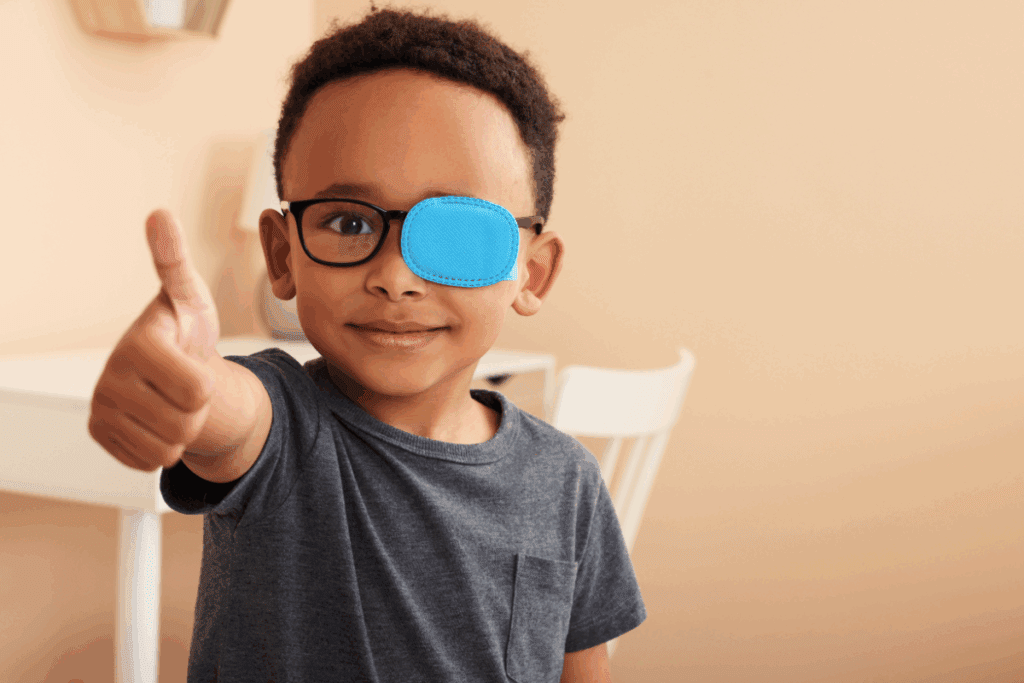
When you picture a child wearing an eye patch, you might first think of Halloween costumes or pirate stories. But in reality, eye patches are an important medical tool that many kids need during critical years of vision development.
If your child’s eye doctor has recommended patching, you may be wondering: Why does my child need this? How does it help? And how can I make sure they actually wear it?
Let’s break it down together.
How Vision Develops in Children
Children aren’t born with perfect vision. Just like learning to walk or talk, vision develops gradually as the brain learns to interpret signals from the eyes. This development is especially rapid in the first 7 to 8 years of life.
If one eye isn’t working as well as the other, the brain may begin to “ignore” it. Over time, that weaker eye won’t develop normal vision. That’s where eye patches come in. They train the weaker eye to catch up and prevent long-term vision loss.
Common Reasons Kids Need Eye Patches
Let’s take a closer look at the most common reasons why kids need to wear eye patches.
1. Amblyopia (Lazy Eye)
Amblyopia is the most common reason kids wear eye patches. It happens when one eye doesn’t develop proper vision because the brain favors the stronger eye. Covering the stronger eye with a patch forces the weaker eye to work harder, helping improve vision over time.
Without treatment, amblyopia can cause permanent vision loss in the weaker eye. Patching is often most effective when started early, but even older children can benefit.
2. Strabismus (Eye Turn or Crossed Eyes)
Strabismus is when the eyes don’t line up properly, turning inward, outward, up, or down. In some cases, the brain may ignore input from the turned eye to avoid double vision.
Eye patching can encourage the brain to pay attention to the misaligned eye, strengthening its visual connection. Depending on severity, patching might be combined with glasses, vision therapy, or surgery.
3. After Eye Surgery
Sometimes, children need a patch to protect the eye after surgery. This gives the eye a chance to heal without strain or exposure. It’s usually temporary but plays a key role in recovery.
4. Other Medical Conditions
Less commonly, eye patches may be prescribed for conditions affecting the cornea, eyelid, or other parts of the eye. No matter the cause, the goal is the same: to protect or strengthen vision when it matters most.
How Patching Works
Eye patches are typically worn directly over the stronger eye. They come as adhesive patches that stick to the skin or as cloth patches that fit over glasses. By blocking vision in the stronger eye, the weaker eye is forced to do the “heavy lifting.”
The number of hours a child needs to patch each day depends on their diagnosis and severity. Some kids may need to patch for just an hour or two, while others wear a patch most of the day. Consistency is key! Skipping patching can slow or even undo progress.
Challenges With Eye Patching
If you’ve ever tried to convince a 5-year-old to do something uncomfortable, you know it can be a battle. Eye patches are no different. Kids may resist wearing them because:
- They can feel itchy or uncomfortable.
- Vision might feel blurry or awkward at first.
- They may feel self-conscious around friends.
- It can make schoolwork or play harder in the beginning.
These challenges are normal. Many parents find that patching gets easier with time, especially when kids understand why it’s important.
Tips to Help Kids Adjust to Eye Patching
Here are some strategies parents have found helpful:
- Make it fun: Let your child decorate patches with stickers or markers. Some companies even sell colorful, themed patches.
- Set a routine: Patch at the same time each day so it becomes part of the schedule.
- Use distractions: Screen time, crafts, or playtime can help the hours fly by.
- Offer rewards: A simple sticker chart or small prizes can motivate younger children.
- Talk openly: Explain to your child that the patch is helping their eye “get stronger,” just like exercise helps muscles.
If you need more ideas, we put together a guide on encouraging kids to wear glasses or eye patches. It’s full of practical, parent-tested tips.
How Long Does Patching Take to Work?
Every child is different. Some see improvement in just a few weeks, while others need months or years of consistent patching. Regular follow-up visits with your child’s eye doctor are essential. These visits track progress and allow for adjustments in the treatment plan.
It’s important to stick with the program, even when it feels tough. Vision development only happens during childhood, so every day of patching counts.
What Parents Should Remember
- Patching is not a punishment. It’s a powerful tool that protects your child’s long-term vision.
- The earlier the treatment starts, the better the results.
- Consistency matters more than perfection. Doing most of the prescribed hours is better than skipping entirely.
- Your child may struggle at first, but with support and encouragement, most kids adjust.
Final Thoughts
Seeing your child in an eye patch can feel overwhelming at first. But remember: it’s a temporary step with a lifelong payoff. By following through with patching, you’re giving your child the best chance at healthy vision for years to come.
And you don’t have to figure it out alone. Our team is here to answer questions, support your family, and celebrate each milestone along the way. If you’d like to learn more about patching or other children’s vision treatments, schedule an exam with us! We’d be happy to help.