

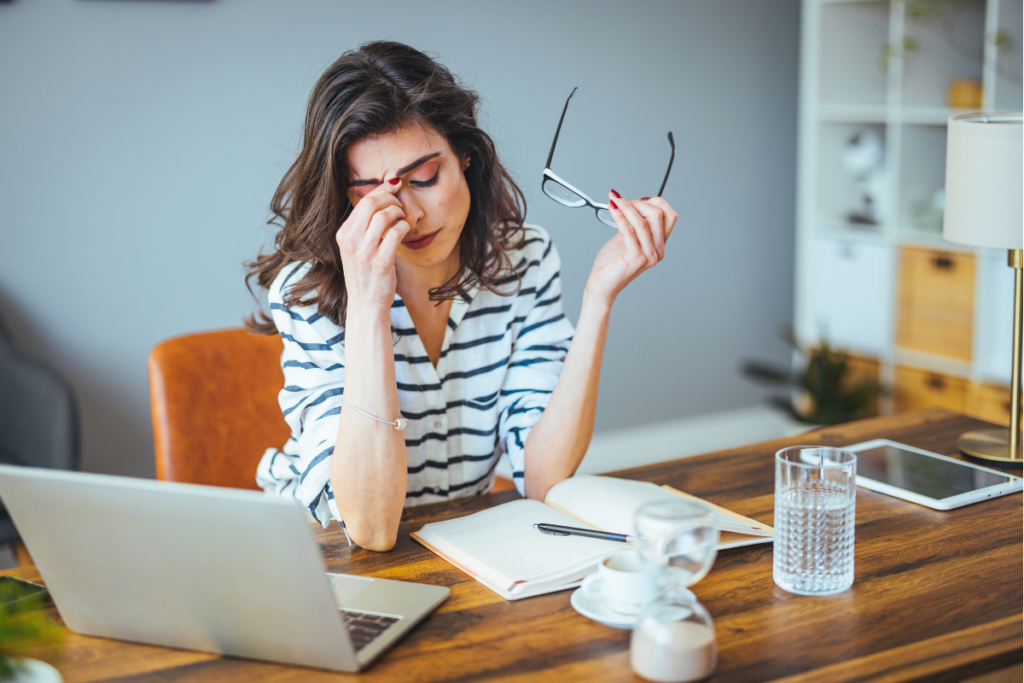
Stress affects nearly every part of the body, so it shouldn’t be surprising that it can affect your eyes, too.
Whether you’re preparing for a major presentation, caring for a newborn, navigating a difficult life event, or simply juggling a busy schedule, stress can sometimes show up in unexpected ways—including changes in your vision.
While stress itself doesn’t usually damage your eyes, it can contribute to symptoms like blurry vision, eye twitching, dry eyes, headaches, and light sensitivity. In some cases, stress may also make existing eye conditions feel worse.
Here’s what you should know about the connection between stress and your vision.
Can Stress Cause Blurry Vision?
Yes, it can. Many people notice that their vision seems blurrier during periods of intense stress or anxiety. This usually isn’t because something is permanently wrong with the eyes. Instead, stress can temporarily affect how your visual system functions.
Stress activates your body’s “fight or flight” response. During this time:
- Your pupils may dilate.
- Your eye muscles can become tense.
- Your focusing system may not work as efficiently.
- You may blink less, causing the surface of your eyes to dry out.
Together, these changes can make your vision seem less clear, especially when reading, working on a computer, or driving.
If the blurry vision comes and goes with stressful situations and resolves afterward, stress may be playing a role.
RELATED CONTENT: What Causes Blurry Vision (And When to Worry)
Can Anxiety Cause Vision Problems?
Yes, anxiety can affect your vision. Anxiety and stress often go hand in hand, and anxiety can produce many of the same visual symptoms.
People experiencing anxiety sometimes report:
- Blurry vision
- Difficulty focusing
- Feeling like their eyes can’t “keep up”
- Increased awareness of floaters
- Tunnel vision during panic attacks
- Light sensitivity
One reason is that anxiety heightens your awareness of normal bodily sensations. You may become much more aware of tiny visual changes that you would normally ignore.
However, it’s important not to assume every vision change is caused by anxiety. New or persistent symptoms should always be evaluated by an eye doctor.
Can Stress Cause Eye Strain?
Yes. Stress often goes hand in hand with long hours on digital devices, poor sleep, and muscle tension, all of which can contribute to eye strain.
You may notice:
- Aching around the eyes
- Tired or heavy eyes
- Burning or irritated eyes
- Difficulty focusing after reading or computer work
Taking regular screen breaks, getting enough sleep, and addressing underlying vision problems can help reduce eye strain. If symptoms persist, an eye exam can determine whether an updated glasses prescription or another eye condition is contributing.
RELATED CONTENT: Digital Eye Strain Tips
Why Does Stress Cause Eye Twitching?
One of the most common stress-related eye symptoms is an eyelid twitch.
An eye twitch, also called myokymia, is usually harmless. It often affects just one eyelid and may come and go throughout the day.
Common triggers include:
- Stress
- Fatigue
- Too much caffeine
- Dry eyes
- Eye strain
The good news is that these twitches often resolve on their own once the trigger improves.
If your twitch lasts for several weeks, involves other parts of your face, or causes your eyelid to completely close, it’s time to schedule an eye exam.
Can Stress Make Dry Eye Worse?
Absolutely. Stress doesn’t directly reduce tear production in everyone, but it can make dry eye symptoms significantly worse.
When you’re stressed, you may:
- Blink less while working.
- Spend more time on digital devices.
- Sleep poorly.
- Become dehydrated.
- Experience changes in hormone levels.
All of these can contribute to dry, irritated eyes.
If you already have dry eye disease, stressful periods may make your symptoms flare up.
RELATED CONTENT: Innovative Dry Eye Treatments That Aren’t Eye Drops
Can Stress Cause Light Sensitivity?
It can. Some people notice that bright lights become more uncomfortable when they’re under stress.
This may happen because stress can contribute to:
- Dry eye
- Migraine headaches
- Muscle tension
- Fatigue
All of these conditions can increase sensitivity to light.
If light sensitivity develops suddenly or is accompanied by severe pain, redness, or vision loss, it should be evaluated promptly.
Can Stress Cause Headaches Behind the Eyes?
Yes. Stress is one of the leading triggers for tension headaches.
These headaches often create:
- Pressure behind the eyes
- Aching around the forehead
- Soreness in the temples
- Neck and shoulder tension
Because the discomfort is centered around the eyes, many people assume they need a new glasses prescription.
Sometimes that’s true—but many times, the eyes are perfectly healthy, and stress is the primary cause.
An eye exam can help determine whether your symptoms are related to your vision or another underlying cause.
Can Stress Damage Your Eyes Permanently?
For most people, no.
The visual symptoms caused by stress are typically temporary and improve as stress levels decrease.
However, chronic stress can make it more difficult to manage certain eye conditions, such as:
- Dry eye disease
- Migraine-related visual symptoms
- Existing eye strain
Taking care of your overall health—including getting adequate sleep, staying hydrated, exercising regularly, and managing stress—can benefit both your body and your eyes.
When Should You See an Eye Doctor?
Although stress can certainly affect your vision, not every vision change should be blamed on stress.
Schedule an eye exam if you experience:
- Blurry vision that doesn’t improve
- Vision loss in one or both eyes
- Flashes of light
- A sudden increase in floaters
- Double vision
- Persistent eye pain
- New light sensitivity that doesn’t resolve
- Frequent headaches associated with vision changes
Many serious eye conditions initially cause symptoms that can seem mild or intermittent. A comprehensive eye exam can help determine whether stress is the cause or whether another eye condition needs treatment.
The Bottom Line
Stress can affect your vision in several ways, including blurry vision, eye twitching, dry eyes, headaches, and light sensitivity. In most cases, these symptoms are temporary and improve as your stress levels decrease.
Still, it’s important not to ignore persistent or sudden changes in your vision. If you’re experiencing ongoing visual symptoms, a comprehensive eye exam can help identify the cause and provide peace of mind.