
As the sun sets over the Boise foothills, transforming the sky into hues of orange and purple, the city takes on a different glow. While night driving offers quieter roads and beautiful cityscapes, it also presents a unique set of challenges for even the most experienced drivers. Reduced visibility, increased glare, and the subtle onset of fatigue can make driving after dark significantly more difficult and potentially dangerous.
Your ability to see clearly and react quickly is heavily tested when light diminishes. That’s why we’ve put together these tips to help you conquer the darkness and drive with greater confidence and safety after sunset.
Why is Night Driving So Much More Challenging?
It’s not just your imagination; driving at night truly demands more from your eyes and your reflexes. Several factors contribute to this increased difficulty:
- Reduced Overall Visibility: The most obvious challenge is the lack of light. This significantly limits your depth perception, making it harder to judge distances to other vehicles, road signs, and obstacles. Your ability to recognize colors diminishes, and your peripheral vision is drastically reduced. You simply see less, and what you do see is less detailed.
- Intensified Glare: Headlights from oncoming traffic, streetlights, and even brightly lit signs can create blinding glare. In low-light conditions, your pupils widen (dilate) to let in more light. While this helps you see in the dark, it also makes your eyes more susceptible to glare. It can ultimately cause temporary blindness or discomfort as light scatters within your eye.
- Compromised Eye Function: Your eyes’ ability to adjust from bright lights to dark areas (and vice-versa) is slower at night. The dilated pupils can also introduce more optical aberrations (imperfections in how light hits your retina). These can lead to slight blurriness or “halos” around light sources, even if your prescription is perfect.
- Fatigue and Drowsiness: Our bodies are naturally wired for sleep after dark. Driving at night often coincides with our natural circadian rhythms, making drowsiness a significant risk factor. Fatigue slows reaction times and impairs judgment, increasing accident risk.
- Wildlife Encounters: In areas like Boise, with its proximity to natural habitats, wildlife like deer, elk, and even smaller animals are much more active and harder to spot at night, posing a sudden and serious hazard.
Essential Tips for Safe Driving at Night
Being aware of the challenges is the first step; taking proactive measures is the next. Here’s how you can make your night drives safer:
1. Keep Your Windshield & Windows Clean
This might seem basic, but it’s incredibly important for clear vision. Dirt, dust, streaks, and smudges on your windshield (both inside and out!) scatter light from oncoming headlights, creating a blinding haze. This dramatically increases glare and reduces overall visibility.
Pro Tip: Clean your windshield with a glass cleaner and a microfiber cloth regularly. Don’t forget the inside, as residues from car interiors and even air conditioning can build up. Consider getting a professional car wash and interior detailing periodically.
2. Maintain & Aim Your Headlights Properly
Most of us never think of maintaining our headlights. They just work! But cleaning and aligning your lights can improve visibility at night. And knowing when to use your high beams can help you drive more safely.
- Cleanliness: Ensure your headlights are free from dirt, mud, snow, or road grime. A dirty headlight drastically reduces light output.
- Alignment: Headlights can become misaligned over time due to bumps or minor impacts. Misaimed headlights won’t properly illuminate the road ahead and, worse, can blind oncoming drivers. Have them checked and aligned by a mechanic periodically.
- High Beam Savvy: Use your high beams only when safe and necessary. That’s usually on dark, unlit roads with no oncoming traffic and when you’re not following another vehicle closely. Dim your high beams as soon as you see an oncoming car or are within 500 feet of a vehicle you are following.
3. Dim Your Dashboard Lights
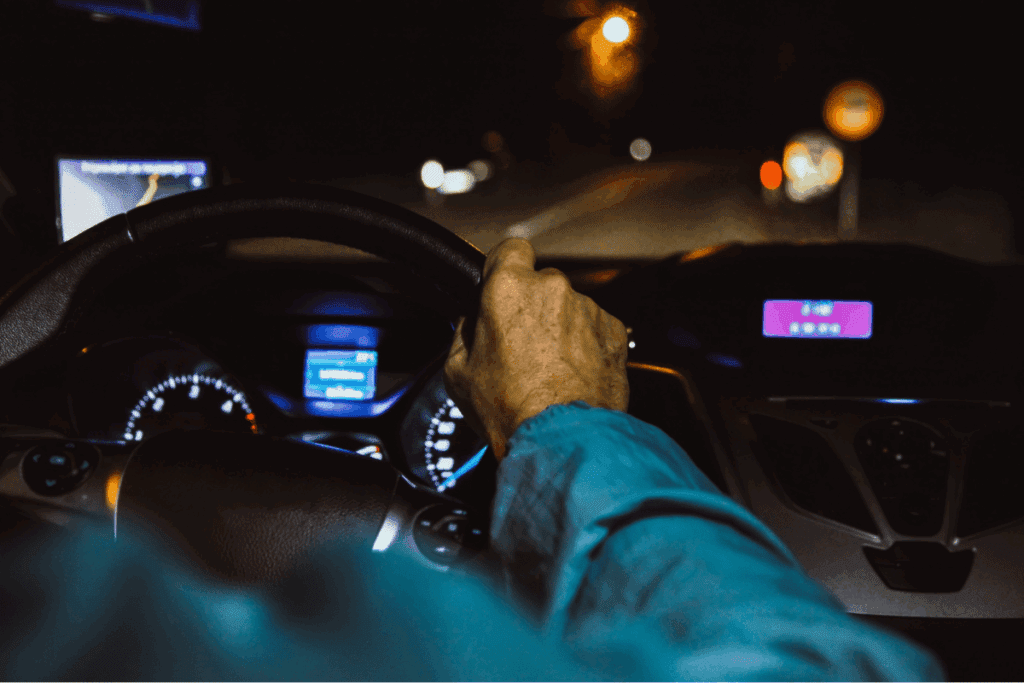
Bright interior lights, including your dashboard, infotainment screen, and GPS, can impair your eyes’ ability to adapt to the darkness outside. Dim them to the lowest comfortable setting.
Resist the urge to turn on overhead interior lights while driving, as this dramatically reduces your ability to see what’s outside the vehicle.
4. Look Away from Oncoming Headlights (Briefly)
When an oncoming car approaches with bright headlights, avoid staring directly into them. Instead, shift your gaze slightly to the right edge of your lane. This allows you to monitor your position on the road while preventing the temporary blindness caused by direct glare. Once the car passes, quickly shift your gaze back to the center of your lane.
5. Slow Down & Increase Your Following Distance
Because your visibility is reduced at night, your reaction time and stopping distance are inherently compromised. Compensate for this by reducing your speed and increasing the space between your vehicle and the one ahead.
A good rule of thumb is to double your following distance at night compared to daytime. This is especially crucial on Boise’s potentially winding roads or when driving in adverse weather like rain or snow, which are even more treacherous after dark.
6. Get Your Eyes Checked Regularly
We aren’t just saying this because we are an eye clinic. Seeing well at night starts with seeing clearly to begin with. Here’s how an eye exam can help:
- Optimal Prescription: Even a slight change in your prescription can significantly impact your night vision, leading to increased glare and reduced clarity. Regular eye exams ensure your prescription is always up-to-date.
- Addressing Conditions: Certain eye conditions naturally worsen night vision or increase glare sensitivity. These include cataracts (which scatter light), dry eye (which causes inconsistent vision), and even uncorrected astigmatism. We can diagnose and help manage these conditions.
- Anti-Reflective Coatings: If you wear glasses, always opt for anti-reflective (AR) coatings. These specialized coatings significantly reduce glare from headlights, streetlights, and other light sources.
- Specialized Lenses: Discuss with your eye doctor if there are specific lens designs or tints that could further optimize your vision for night driving. For example, a rose tint may help increase color contrast at dusk.
7. Manage Fatigue Effectively
Avoid driving at night if you are already tired. Pull over and take a short nap if necessary. On long night trips, pull over every couple of hours to stretch, walk around, or grab a non-caffeinated drink. If possible, plan long journeys to be completed during daylight hours.
8. Be Extra Aware of Wildlife
Living in Boise means sharing our roads with deer, elk, and other animals. They are most active at dusk, dawn, and during the night. Scan the shoulders of the road, particularly in rural or semi-rural areas. Use your high beams when safe to extend your viewing distance, and be prepared to stop suddenly.
9. Avoid Distractions
This applies to all driving, but it’s even more critical at night. Put your phone away, avoid eating messy foods, and keep your focus entirely on the road ahead. Your reaction time is already compromised; don’t add to it with distractions.
10. Keep Your Glasses Clean (If You Wear Them)
Just like your windshield, smudges, fingerprints, and dirt on your eyeglasses can scatter light and create distracting glare. Keep a clean microfiber cloth in your car for quick wipes.
When to Talk to Your Eye Doctor About Night Driving Issues
If you regularly experience any of the following while driving at night, it’s time to have a talk with your eye doctor:
- Excessive glare
- Halos or starbursts around lights
- Worsening night vision despite clear daytime vision
These could be signs of an underlying eye health issue that needs professional assessment.
Night driving demands heightened awareness and optimal vision. By implementing these practical tips, you can significantly enhance your safety and confidence on the road after sunset.
Schedule your next comprehensive eye exam at Emerald Point Eye Care today to ensure your vision is at its peak for all driving conditions, day or night. We’re here to help you see the world clearly and safely.