

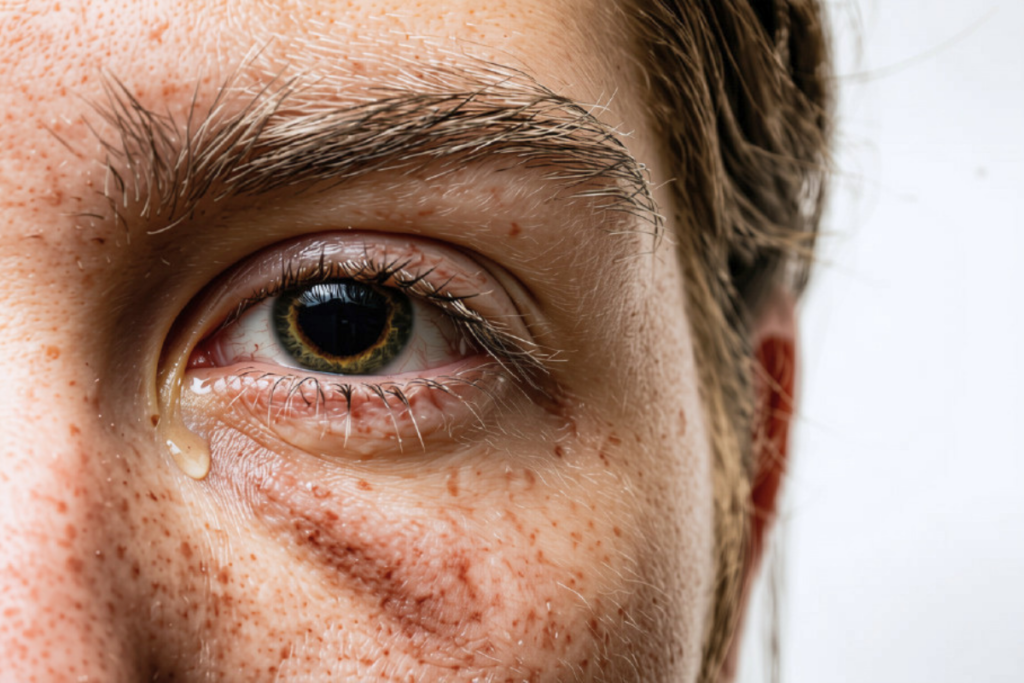
If you’ve ever wondered, “Why do my eyes water?” you’re not alone. Watery eyes are one of the most common reasons people mention during an eye exam.
While it may seem like your eyes are producing too many tears, watery eyes are often your body’s response to irritation, dryness, or another underlying issue. So, watery eyes don’t always mean you have an excess of healthy tears.
From dry eye disease and allergies to windy weather and even yawning, there are many reasons your eyes keep watering. Understanding the underlying cause is the first step toward finding relief.
Common Causes of Watery Eyes
Dry Eye Disease
This is one of the biggest surprises for patients.
Many people assume that if their eyes are watering, they can’t possibly have dry eyes. In reality, dry eyes causing watery eyes is incredibly common.
Here’s why.
Your eyes are covered by a thin layer called the tear film. This tear film helps keep your eyes comfortable, protects the surface of the eye, and provides clear vision. When the tear film is unstable or your tears evaporate too quickly because of poor tear quality, the surface of your eye becomes irritated.
In response, your brain tells your tear glands to produce a rush of reflex tears.
These reflex tears are mostly water. They often overflow onto your cheeks because they lack the proper balance of oils and mucus needed to stay on the eye’s surface. As a result, they don’t solve the underlying problem, which is why your eyes keep watering even though they still feel dry.
If you experience chronic tearing along with burning, fluctuating vision, or a gritty sensation, dry eye disease may be the culprit.
RELATED CONTENT: Innovative Dry Eye Treatments That Aren’t Eye Drops
Allergies
Seasonal allergies are another common cause of watery eyes.
When your eyes come into contact with pollen, pet dander, dust mites, or other allergens, your body releases histamine. This can lead to:
- Itchy eyes
- Red eyes
- Puffy eyelids
- Eyes watering
- Sneezing and congestion
Unlike dry eye, allergies are usually accompanied by significant itching. If your symptoms seem worse during certain seasons or after spending time outdoors, allergies may be contributing to your watery eyes.
RELATED CONTENT: Eye Allergies vs Dry Eye
Cold Weather
Cold air, wind, and low humidity can all irritate the surface of your eyes. In response, your body may produce an overflow of reflex tears to help protect the eye. Ironically, this often happens because your tear film is drying out more quickly—not because your eyes have too many healthy tears.
Many people notice their eyes water in cold weather when:
- Walking outside on a windy day
- Skiing or snowboarding
- Driving with the windows down
- Moving between warm indoor air and cold outdoor temperatures
If your eyes water every winter, it may be a sign of dry eye disease or an unstable tear film rather than simply “sensitive eyes.” Learn more about managing dry eye symptoms during Boise winters.
Wind, Smoke & Dry Air
Sometimes your environment is to blame.
Wind, air conditioning, smoke, dust, wildfire haze, and dry climates can all irritate the surface of the eye. Your body responds by producing additional tears to protect your eyes.
Many people notice their eyes water when:
- Riding in the car with the windows down
- Walking outside on windy days
- Sitting directly under air vents
- Spending time around smoke
- Being outdoors during wildfire season
These are normal protective responses, but if they happen frequently, it may also indicate an underlying tear film problem.
Irritant in Your Eye
Sometimes the answer is much simpler.
An eyelash, dust particle, contact lens, makeup, sunscreen, or other foreign material can irritate your eye and trigger excessive tearing.
If only one eye is watering suddenly, think about whether something may have gotten into that eye.
However, if the irritation doesn’t improve, avoid rubbing your eye and schedule an examination. Occasionally, a small scratch on the cornea or another eye condition can produce similar symptoms.
Blocked Tear Ducts
Believe it or not, watery eyes can also happen when your tears can’t drain properly.
Normally, tears flow across the surface of your eye before draining through tiny openings in your eyelids called tear ducts. If one of these ducts becomes narrowed or blocked, tears have nowhere to go and simply spill over your eyelid.
A blocked tear duct is more common in infants and older adults, but it can occur at any age.
Yawning
When you yawn, the muscles around your face and eyelids tighten. At the same time, your eyelids briefly squeeze together, which can temporarily reduce how efficiently your tears drain through the tear ducts.
The pressure from those muscles, combined with slower tear drainage, can cause tears to overflow onto your cheeks.
So if you’ve ever wondered, “Why do tears come out when you yawn?” the answer is simple: it’s usually a normal mechanical response—not a sign that your eyes are producing too many tears.
Some people also notice their eyes water when yawning more than others, and that’s completely normal.
When Should You See an Eye Doctor for Watery Eyes?
Occasional tearing is perfectly normal. However, you should schedule an eye exam if your watery eyes:
- Last for several weeks
- Affect only one eye for an extended period
- Are accompanied by eye pain
- Cause blurry or fluctuating vision
- Produce thick or colored discharge
- Occur along with significant redness or light sensitivity
An eye doctor can determine whether your symptoms are related to dry eye disease, allergies, a blocked tear duct, an eyelid problem, or another eye condition.
The Bottom Line
Remember that there isn’t one single answer to solv what makes your eyes water.
Watery eyes are often your body’s way of telling you something isn’t quite right. While allergies, environmental irritants, and even yawning can all cause eyes watering, one of the most common causes is actually an unstable tear film from dry eye disease.
The good news is that the underlying cause can usually be identified during a comprehensive eye exam. Once you know what’s causing your chronic watery eyes, treatment can focus on solving the problem rather than simply wiping away the tears.